The Live Betting Slowdown: Why Asian Sportsbooks Move Faster When the Game Is On
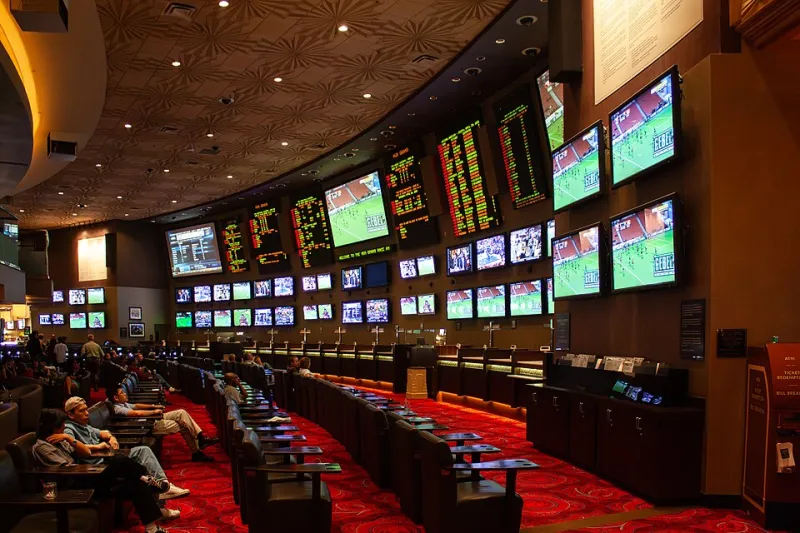
Photo: Chad Davis, CC BY 2.0, via Wikimedia Commons
The Frozen Screen Problem
It's the fourth quarter. A team just turned the ball over at midfield and you want to jump on the live line before the market adjusts. You tap confirm on your US sportsbook. The little spinner appears. The game clock ticks. The spinner keeps spinning. Then one of three things happens: your bet gets accepted at a price that no longer reflects reality, it gets rejected entirely, or the line has already moved and you're offered a worse number with a prompt asking if you still want it.
This scenario plays out thousands of times every day for American live bettors, and most of them assume it's just how live betting works. It isn't. Log into one of the major Asian-facing sportsbooks that KantorBola covers — platforms built to handle the enormous live betting volumes that drive Southeast Asian markets — and the experience is materially different. Bets process in under a second. Lines move more gradually. Liquidity is deep enough that your wager doesn't visibly shift the price against you.
Understanding why requires a look under the hood at how these platforms are actually built.
Infrastructure Is Destiny
US-licensed sportsbooks are, in most cases, running technology that was designed for pre-game wagering and retrofitted for live markets. The compliance layer alone — required for US regulatory environments — adds latency. Every bet routes through verification checks, geolocation confirmation, and responsible gaming controls before it touches the odds engine. None of that is inherently bad, but it adds time. And in live betting, time is the entire product.
Asian betting platforms, many of which have been running high-volume in-play markets since the early 2000s, built their infrastructure around live wagering from the ground up. Bet acceptance is handled at the exchange or market-making level with minimal intermediary steps. The result is acceptance speeds that can be five to ten times faster than what most American bettors are used to.
The liquidity difference compounds this. During a major NFL game on a Sunday afternoon, a large US sportsbook might have tens of millions of dollars in total live market exposure. A major Asian platform running the same game — often with significant action from markets across multiple time zones — can have multiples of that. Deeper liquidity means individual bets move lines less, which means the price you see when you click is closer to the price you actually get.
The Delay Tax in Real Numbers
Let's ground this in a real scenario from the 2023 NFL playoffs. During a late-game drive with about two minutes left, a team converted a crucial third down. On US platforms, the live spread shifted by roughly three points within about 90 seconds. During that window, most books suspended the market briefly while they recalibrated.
On Asian platforms tracking the same game, the line moved more gradually — roughly a point every 20-25 seconds — and the market never suspended. Bettors who identified the value in the original spread had a meaningful window to act. The acceptance delay on US books effectively closed that window before most users could place their wager.
That spread difference — even just a point and a half at the right moment — is the kind of edge that separates winning live bettors from break-even ones over a full season. Multiply it across dozens of in-play opportunities per week and the gap becomes significant.
How Sharp Bettors Are Exploiting This
The most sophisticated American bettors who've migrated to Asian platforms aren't just chasing faster acceptance times. They're building strategies around the predictable patterns in how these platforms manage lines during live events.
One common approach involves what traders would call latency arbitrage — identifying moments when a live event (a score, a penalty, a visible injury) has occurred but hasn't yet been fully priced into one platform's live market. Because Asian books with deeper liquidity tend to move lines more smoothly rather than suspending and repricing in jumps, there are windows where a sharp bettor can get on the right side of a line that's in the process of moving rather than waiting for the new price to fully settle.
Another strategy exploits the correlation between pre-game Asian Handicap lines and live market behavior. Asian books have a longer track record of setting sharp pre-game lines, which means their live lines tend to start from a more accurate baseline. When a live event pushes the line away from that baseline temporarily — say, a fluky early score in a soccer match that doesn't reflect actual game control — the reversion tendency is more predictable and bettable.
What This Means for Your Live Betting Approach
If you're primarily a live bettor working with US sportsbooks, there are a few immediate adjustments worth considering.
First, stop expecting the spinner to resolve in your favor. Build your strategy around the assumption that your bet will be delayed, and identify wager types where a 30-60 second delay is less punishing. Longer-duration live props — first team to score in the next ten minutes of a soccer match, for example — are less sensitive to acceptance latency than point-spread bets tied to the current game state.
Second, if you're going to invest time in live betting as a serious strategy, the platform question matters enormously. The gap in infrastructure between top Asian-facing books and domestic US platforms isn't a minor inconvenience — it's a structural disadvantage that affects your results on every single in-play wager.
The live betting market is where the real action is in modern sports wagering. The Southeast Asian platforms that built their businesses around it have a head start measured in years. American bettors who recognize that gap are already closing it.